The performance of exterior glazing isn’t just defined by the product: it’s defined by the detail.
Architectural glazing is expected to do a lot – bring in natural light, contribute to thermal regulation, and elevate the character of a building. But no matter how advanced the specification, its performance is only as strong as the way it’s integrated into the building fabric.
Poorly detailed junctions are still one of the most common sources of failure. Thermal bridging, air leakage, and condensation issues – all of these typically originate not from the product itself, but from the way it’s sealed, supported, and connected to the structure.
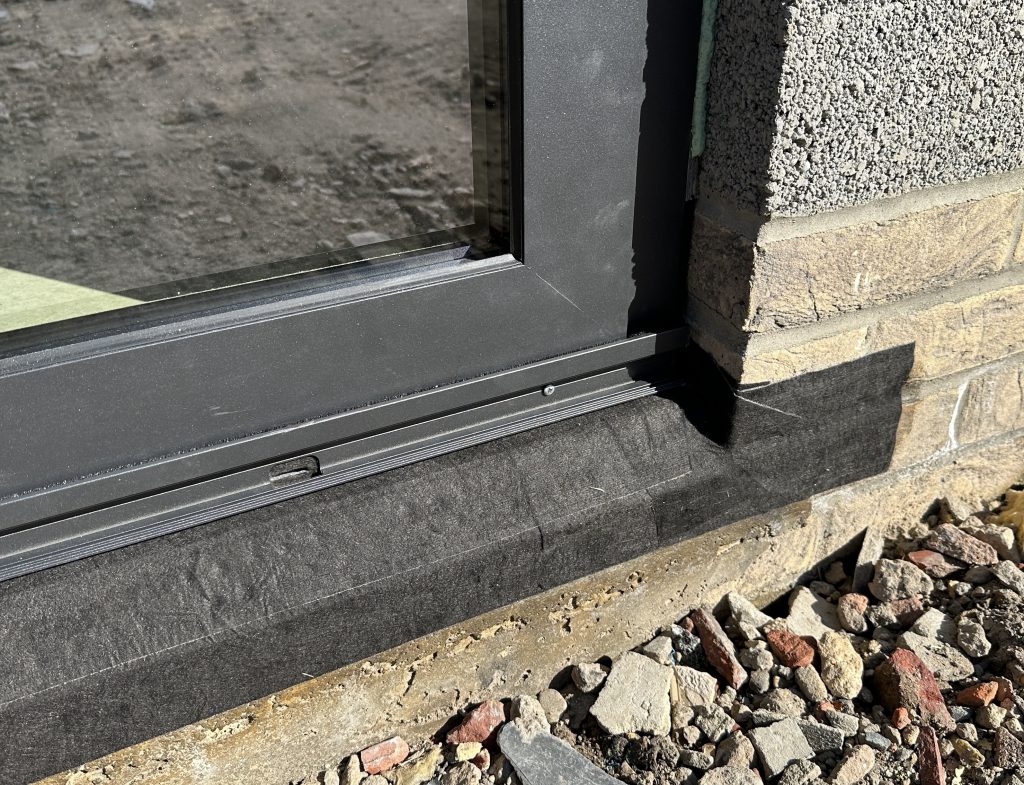
We treat perimeter sealing and installation detailing as a fundamental part of the system, not an afterthought. We work with high-performance products from Illbruck, Siga, Soudal, and Pro Clima to ensure each interface is sealed, airtight, and thermally robust.
In areas where our glazing systems meet the floor, we go further.
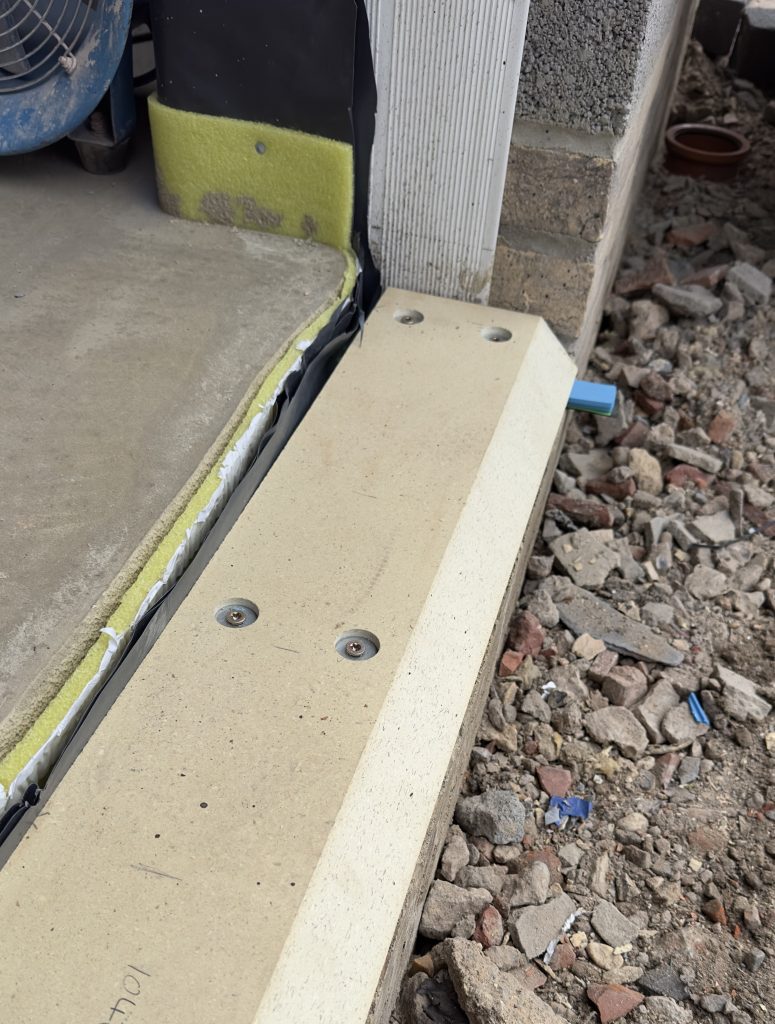
We install Purenit at the base. A high-performance material that delivers exceptional compressive strength while offering low thermal conductivity. This prevents thermal bridging and provides a solid, dimensionally stable base for installation.
Critically, we fix and level the Purenit first, ensuring absolute accuracy across the threshold. This step guarantees that door leaves operate smoothly, sliding elements glide properly, and seals compress evenly. This crucial step makes a huge difference in long-term performance and user experience.
Because great performance doesn’t come from good products alone.
It comes from:
– Meticulous preparation and substrate planning
– Rigorous attention to junction design and compatibility
– Precision in on-site installation and sequencing
By adhering to this approach, we achieve:
– Continuity in the thermal and airtight envelope
– Elimination of thermal bridges at key interfaces
– Higher operational efficiency, lower energy demand
– Improved longevity and comfort
– Verified compliance with energy and building standards
Up to 30% of a building’s heat loss can occur through junctions and thermal bridging. This is why we focus on design and installation from the details upward.
Execution is not merely the last step in the process; it is where true performance is delivered.